Treatment guides
Heart surgery in India for international patients: a full guide
Bypass, valve surgery and angioplasty in India: how the doctor's opinion and written estimate work, the medical visa, the hospital stay and recovery at home.
 Healway Global editorial team · · 9 min read

Many families from Africa and the Middle East travel to India for heart surgery because large hospitals in Delhi and Gurugram offer the full range of heart care, from angioplasty to bypass and valve surgery, under one roof. The process is simpler than it looks: you send your reports, a cardiac team gives its opinion and a written estimate, and only then do you decide whether to travel.
This guide walks you through each step, in plain language. It is written for patients and, just as often, for the son, daughter or spouse who is organising everything. It does not replace the advice of your own doctor or of the heart team who will read your reports.
Heart treatments people travel to India for
“Heart surgery” covers several very different treatments. Which one is right is a medical decision that only a cardiologist or cardiac surgeon can make after reading your reports. Here is a short, general description of the most common ones, based on information published by the UK’s National Health Service (NHS).
Coronary angioplasty and stents
Angioplasty widens narrowed or blocked coronary arteries, the blood vessels that supply the heart. A small balloon is used to open the artery, and in most modern procedures a stent (a short wire mesh tube) is left in place to keep it open. The NHS says the procedure takes between 30 minutes and 2 hours and is done under local anaesthetic, while you are awake.
Coronary artery bypass graft (CABG)
Bypass surgery improves blood flow to the heart by using a healthy blood vessel, usually taken from the leg or chest, to go around a blocked artery. According to the NHS, it is done under general anaesthetic, usually takes 3 to 6 hours, and the heart is usually connected to a heart-lung bypass machine during the operation. Some patients need up to four grafts.
Heart valve repair and replacement
When a valve is too narrow or leaks, it can be repaired or replaced. The NHS describes three main approaches:
- Open heart surgery, the most common method, through a cut in the breastbone.
- Keyhole (minimally invasive) surgery, through smaller cuts, which is not suitable for everyone.
- TAVI (transcatheter aortic valve implantation), where a new aortic valve is placed through a catheter. The NHS says it is used when other surgery is not suitable or is too risky, and takes 1 to 2 hours.
Replacement valves are either mechanical (carbon and metal), which usually last a long time but mean taking anticoagulant medicines for life, or tissue valves, which the NHS says usually last 15 to 20 years. Your surgeon will explain which is suitable for you.
Other heart care
Leading hospitals also treat heart rhythm problems, heart failure and congenital heart disease in children and adults. If your family member has been told they need “heart surgery” without more detail, the first step is the same: send the reports and let a specialist explain the options.
Why families choose India for heart care
Families usually weigh three things: the hospital, the heart team, and having a clear plan before they leave home.
- Accredited hospitals. The hospitals Healway Global works with hold both JCI (Joint Commission International) and NABH (India’s National Accreditation Board for Hospitals & Healthcare Providers) accreditation. You can check any hospital yourself on the JCI and NABH websites.
- Full range of procedures in one place. Max Super Speciality Hospital, Saket says its cardiac surgeons perform coronary artery bypass grafting, valve repair and replacement and aortic surgery, and that its interventional cardiologists perform angioplasty, stenting and balloon valvuloplasty. Medanta – The Medicity lists CABG and TAVI among its heart procedures, and Fortis Memorial Research Institute lists bypass surgery, angioplasty, stenting, TAVR and MitraClip.
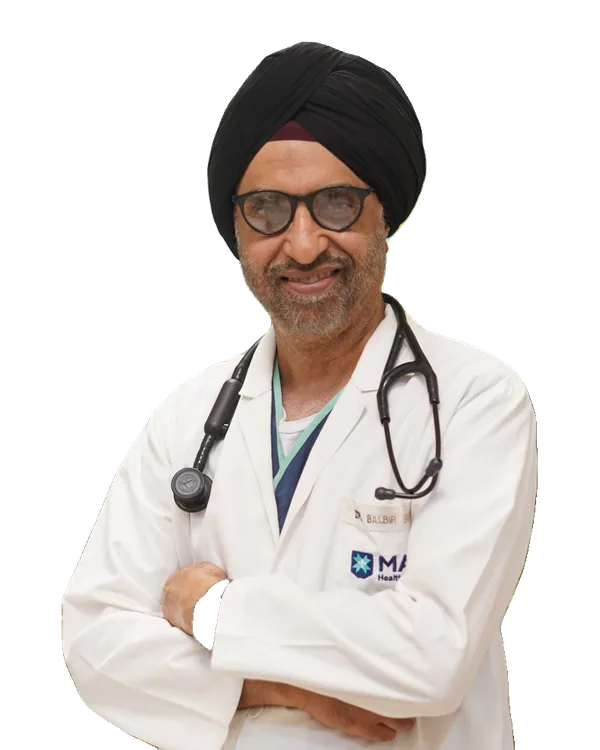
- Experienced specialists. Heart teams in Delhi and Gurugram include well-known names such as Dr. Naresh Trehan, Chief Cardiac Surgeon at Medanta, and Dr. Balbir Singh, Group Chairman of Cardiac Sciences at Max Healthcare. You can see more heart specialists on our cardiac care page.
- Treatment in English, with help in your language. Hospitals work in English, and a coordinator can help you in French or Arabic.
India is not the right choice for everyone. If travelling is not safe for the patient, or if good treatment is available close to home, an honest adviser will say so.
Step 1: Send your reports for a medical opinion
The heart team can only give an opinion when it sees your recent medical reports. Please send what you have; you do not need everything to start. The most useful documents are usually:
- A short summary from your current doctor, with the diagnosis and medicines.
- Echocardiogram (echo) report, and the images or video if you have them.
- Coronary angiography report and, if possible, the CD or video files.
- ECG and any stress test or Holter report.
- Recent blood tests (for example kidney function, blood count, sugar).
- Any CT or MRI reports, and notes from earlier heart procedures.
- The patient’s passport page, which is needed later for the visa letter.
Photos taken with a phone are fine for a first look, as long as the text is readable. The specialist may ask for more tests before giving a final opinion.
Step 2: The opinion and the written estimate
Once the reports are with the hospital, a cardiologist or cardiac surgeon reviews them and sends an opinion. This usually explains what the doctor thinks is needed, any tests to do on arrival, and roughly how long the hospital stay may be.
With the opinion comes a written estimate from the hospital. It normally depends on:
- the type of procedure (for example angioplasty, bypass or valve surgery);
- the room category you choose;
- the number of stents, the type of valve or other devices, if any;
- the patient’s general health, which can affect time in intensive care.
An estimate is not a final bill. If the doctors find something new once you arrive, the plan and the cost can change, and the hospital should explain this to you in writing. We do not publish prices on this blog, because every case is different. You can read how we work with hospitals on our fees and transparency page.
A video consultation before you decide
Many families feel better after speaking to the doctor face to face. Where the hospital offers it, Healway Global can arrange a video consultation with the specialist, so you can ask your questions before booking any flights.
Step 3: The medical visa and travel
India’s official e-Visa portal offers an e-Medical visa for the patient and an e-Medical Attendant visa for family members. According to the portal:
- you apply online at least 4 days before arrival;
- the patient’s application needs a scan of the passport photo page and a letter from the Indian hospital, on its letterhead, with the date or expected date of admission;
- up to two e-Medical Attendant visas can be granted with one e-Medical visa.
Rules can change, so always check the official portal before applying. The hospital’s invitation letter is usually issued once you confirm that you want to go ahead. Healway helps you get this letter and checks your application before you submit it.
Plan your flight with the doctor’s advice in mind. If the patient is unwell, ask the hospital whether they need a wheelchair, oxygen or a medical escort for the journey.
Step 4: In hospital in India
On arrival, the hospital usually repeats some tests and the heart team confirms the plan with you. Ask them to explain each step and to give you any consent forms in good time to read.
How long people stay depends on the procedure and on how each person recovers. As a general guide from the NHS:
| Procedure | Typical hospital stay (NHS guide) | Recovery notes (NHS guide) |
|---|---|---|
| Planned angioplasty with stent | Same day or next day | Avoid heavy lifting and driving for about 1 week |
| Bypass surgery (CABG) | About a week | Most normal activities after about 6 weeks; full recovery usually 2 to 3 months |
| Open valve replacement | About a week | Full recovery about 2 to 3 months |
| TAVI | About 2 to 3 days | Recovery is usually quicker than open surgery |
These figures come from the UK and are only a guide. After a heart attack or an emergency procedure, the stay is usually longer. Your doctors in India will tell you how long to stay in the hospital, how long to remain in the city afterwards, and when it is safe to fly home.
Families usually stay in a hotel or serviced apartment close to the hospital. Bring comfortable clothes, the patient’s usual medicines in their original boxes, and copies of every report.
Step 5: Going home and follow-up
Recovery continues long after the operation. Before you leave India, make sure you have:
- a discharge summary that lists the procedure, any stents or valves used, and all medicines;
- a clear schedule for medicines. After a stent, for example, the NHS says most people take aspirin plus a second antiplatelet medicine for up to a year, and it is very important not to stop them without medical advice;
- instructions for wound care, activity, diet and warning signs;
- the date of your first check-up and how to contact the team in India.
The NHS also describes cardiac rehabilitation, an exercise and support programme after heart treatment. Ask your local doctor whether something similar is available near you. Give your discharge summary to your local cardiologist so they can continue your care.
Questions to ask the heart team
Write these down and take them to the video consultation or the first meeting:
- What exactly is the problem with my heart, and what are all the options, including not having surgery?
- Why do you recommend this procedure for me?
- Who will perform it, and who will look after me after the operation?
- What are the main risks in my case?
- What does the written estimate include, and what could change it?
- How long should I stay in hospital and in India?
- Which medicines will I take, and for how long?
- What follow-up will I need when I am home, and how do I reach you if I have questions?
How Healway Global can help
Healway Global is a medical travel company based in Gurugram, close to the hospitals where our patients are treated. We help families from Nigeria, DR Congo, Chad, Rwanda and many other countries plan heart treatment in India, calmly and clearly.
- WhatsApp first, no forms. Send one message and a real person replies, in English, French or Arabic.
- Only JCI and NABH accredited hospitals. Our partner hospitals are Medanta – The Medicity, Max Super Speciality Hospital Saket and Artemis Hospital, with Fortis Memorial Research Institute and others on request. See them all on our hospitals page.
- A written estimate before you travel. You see the hospital’s own estimate in writing, and you pay the hospital directly.
- Video consultation first, where the hospital offers it, so you can speak to the specialist before deciding.
- Airport to airport. We help with the visa letter, your stay, and every day in the hospital, until you fly home. Read more about our airport-to-airport support.
We never promise outcomes, and we will tell you honestly if we think India is not the best option for you. To start, read how it works, see our guides for patients from Nigeria and DR Congo, or simply send us a message on WhatsApp with the reports you have.
This article is general information, not medical advice. Your treating doctors decide what is right for you.
Sources
- NHS – Coronary artery bypass graft: how it's done
- NHS – Coronary artery bypass graft: recovery
- NHS – Coronary angioplasty and stent insertion
- NHS – Coronary angioplasty: recovery
- NHS – Heart valve replacement: how it's done
- NHS – Heart valve replacement: recovery
- Indian e-Visa (e-Medical and e-Medical Attendant visa) – official portal
- Medanta – Heart Institute
- Max Healthcare – Cardiac Sciences
- Fortis Healthcare – Cardiac Sciences
- Joint Commission International – accredited organisations
- NABH – National Accreditation Board for Hospitals & Healthcare Providers